
Views: 222 Author: Leah Publish Time: 2025-12-15 Origin: Site


Content Menu
● Understanding Carbon Silicon Carbide
>> Main Types of Silicon Carbide
● Why Germany Is a Strategic Hub
● The Role of German Companies in the SiC Value Chain
● Dragon Abrasives Group Limited as a Global SiC Partner
● Key Properties and Advantages of Silicon Carbide
>> Hardness and cutting ability
>> Thermal and chemical stability
>> Electrical and electronic performance
● Practical Applications in German Industry
>> Abrasive tools and surface finishing
>> Refractories and kiln equipment
>> Advanced ceramics and wear parts
>> Power electronics and e‑mobility
● How to Select Carbon Silicon Carbide Manufacturers and Suppliers
>> Product range and specialization
>> Quality management and consistency
>> Technical support and customization
>> Logistics, packaging, and documentation
● Building a China–Germany Silicon Carbide Supply Chain
● FAQs
>> 1. What is the main difference between black and green silicon carbide?
>> 2. Why do German industries rely so heavily on silicon carbide?
>> 3. How can buyers evaluate the quality of a silicon carbide supplier?
>> 4. What advantages does partnering with Dragon Abrasives Group Limited offer?
>> 5. Are there any special regulatory concerns when importing silicon carbide into Germany?
Germany is one of the most important markets in the world for advanced abrasives, refractories, and semiconductor materials, and Carbon Silicon Carbide manufacturers and suppliers play a central role in this landscape. For international buyers and technical professionals, understanding how German companies work with silicon carbide (SiC) and how to build a reliable cross‑border supply chain is essential.
This article explores what Carbon Silicon Carbideis, why Germany is a key hub, how German companies typically use SiC, and how global exporters such as Dragon Abrasives Group Limited in China can cooperate with German partners. It is written for engineers, procurement managers, and abrasive‑tool professionals who want a clear and practical overview of the market.

Carbon silicon carbide, usually referred to simply as silicon carbide or SiC, is a synthetic carbide produced from high‑purity silica sand and carbon sources such as petroleum coke in high‑temperature electric resistance furnaces. The result is a hard, sharp, and chemically stable material with a combination of properties that few other industrial materials can match.
From a performance point of view, SiC offers very high hardness, high thermal conductivity, excellent thermal shock resistance, and strong chemical stability in aggressive environments. These characteristics explain why carbon silicon carbide manufacturers and suppliers serve so many different industries, from traditional grinding and cutting tools to high‑tech power electronics. In many applications, SiC replaces or complements alumina, boron carbide, and other advanced ceramics.
When talking about carbon silicon carbide manufacturers and suppliers, two main commercial types of SiC are usually mentioned: black silicon carbide and green silicon carbide.
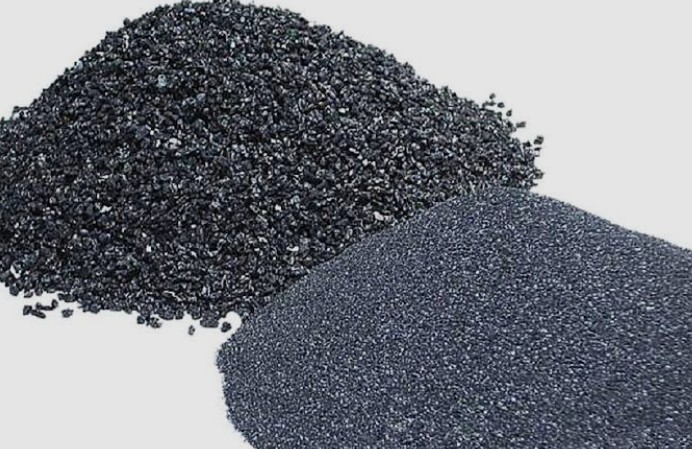
Black silicon carbide is produced from quartz sand and petroleum coke and typically has slightly lower purity but higher toughness. It is widely used in bonded abrasives, coated abrasives, and blasting media because it cuts aggressively while maintaining good strength. Green silicon carbide is produced with higher purity raw materials and usually has higher SiC content and lower impurities. It is commonly used for grinding hard and brittle materials, precision lapping, and advanced ceramic applications.
In addition to color and purity, carbon silicon carbide manufacturers and suppliers deliver SiC in different particle size ranges. Macrogrits are used in grinding wheels and large abrasive tools, while microgrits and fine powders are used for lapping, polishing, and sintering into ceramic components. For buyers, understanding the relationship between SiC type, particle size, and end use is the first step in choosing the right supplier.
Germany has a long industrial tradition in metalworking, chemicals, ceramics, and precision engineering. This background has naturally led to the growth of a strong domestic ecosystem of carbon silicon carbide manufacturers and suppliers, as well as specialized distributors and processors that incorporate SiC into high‑value finished products.
In abrasives, German companies produce grinding wheels, mounted points, cutting discs, and coated abrasives for both domestic customers and export markets. Many of these tools rely on silicon carbide grains, especially for grinding non‑ferrous metals, cast iron, glass, stone, and advanced ceramics. The demand for consistent, sharp, and pure SiC supports close relationships between German users and global carbon silicon carbide manufacturers and suppliers.
Germany is also a leader in refractories and high‑temperature engineering. Foundries, steel mills, glass plants, and ceramic manufacturers rely on refractory bricks, kiln furniture, and monolithic linings that often incorporate SiC to improve thermal shock resistance and extend service life. For these segments, stable cooperation with experienced carbon silicon carbide manufacturers and suppliers is critical, because refractory performance strongly depends on raw material quality.
Finally, Germany is part of Europe's advanced semiconductor and power electronics ecosystem. SiC wafers and devices are increasingly adopted in electric vehicles, industrial drives, and renewable energy converters due to their ability to operate at higher temperatures, voltages, and switching frequencies. While the wafer and device sector is highly specialized, it still depends on a broader supply chain of high‑purity powders and precursors sourced from global carbon silicon carbide manufacturers and suppliers.
Not every company in Germany that works with SiC is a primary producer of silicon carbide. Many firms operate in the middle or downstream of the value chain, taking raw SiC grains and powders from large global carbon silicon carbide manufacturers and suppliers and converting them into finished tools, components, or systems.
Typical roles in the German SiC value chain include:
- Abrasive tool manufacturers that formulate bonded grinding wheels, coated abrasive belts, and specialty tools using imported silicon carbide grains.
- Refractory producers that blend SiC with other aggregates and binders to create bricks, shapes, and castables tailored to steel, glass, and ceramic kilns.
- Surface finishing specialists and distributors that package SiC blasting media and lapping powders for use in workshops and industrial plants.
- Engineering ceramics and mechanical seal producers that sinter high‑purity SiC powders into wear‑resistant parts.
- Semiconductor companies that process SiC wafers into power devices and modules for automotive and industrial customers.
Because of this multi‑layered structure, German companies often maintain long‑term relationships with both local distributors and overseas carbon silicon carbide manufacturers and suppliers. For buyers outside Germany, this structure means that they can either source finished products from German tool makers or work directly with global SiC producers to feed their own manufacturing operations.
Dragon Abrasives Group Limited is a professional Chinese company that focuses on the production and export of high‑quality abrasives and refractory raw materials. Over many years of international business, the company has developed a strong presence in markets such as North America, Western Europe, Southeast Asia, and other regions. Silicon carbide — both black and green, in multiple grit sizes — is one of the core products that Dragon Abrasives offers to customers worldwide.
The company produces SiC in electric resistance furnaces using selected quartz sand and petroleum coke, then crushes and classifies the material into standard grit sizes according to international systems such as FEPA and GB/T. Strict process controls ensure stable chemistry, with high SiC content and controlled levels of free carbon and oxides. This level of quality and consistency allows German abrasive and refractory producers to integrate Dragon Abrasives' silicon carbide into their formulations with confidence.
Because Dragon Abrasives Group Limited acts as a specialized exporter, it understands the documentation, packaging, and logistics requirements of European customers. Technical data sheets, Safety Data Sheets, and test reports are provided to help German partners verify that the silicon carbide meets their internal standards. In this way, Dragon Abrasives positions itself not only as a raw material seller but also as a technical ally among global carbon silicon carbide manufacturers and suppliers.
To appreciate why carbon silicon carbide manufacturers and suppliers are so important, it helps to look more closely at the technical advantages of SiC. Several material properties make silicon carbide uniquely valuable in industrial environments.
Silicon carbide is significantly harder than most conventional abrasive minerals, including many forms of alumina. Its crystal structure and fracture behavior allow SiC grains to remain sharp as they break down under load. This self‑sharpening effect is particularly useful in grinding and cutting tools, where fast material removal and cool cutting are important.
For Carbon Silicon Carbide Manufacturers and Suppliers serving the German market, this hardness advantage means that SiC is a natural choice for grinding cast iron, non‑ferrous metals, and hard, brittle materials such as glass, ceramics, and stone. In many cases, German end users choose silicon carbide wheels or belts when they require high cutting speed and relatively low heat generation.
Another major advantage is the ability of silicon carbide to withstand high temperatures and aggressive atmospheres. Refractory bricks and kiln furniture made with SiC can operate in furnaces that would quickly damage less robust materials. This allows German steel, glass, and ceramics producers to run their equipment at demanding conditions while minimizing downtime and maintenance.
From the perspective of carbon silicon carbide manufacturers and suppliers, this thermal stability opens profitable markets in refractories, kiln components, and thermal process equipment. It also creates demand for special SiC grades tailored to oxidizing or reducing atmospheres, as well as to specific temperature ranges.
At the high‑tech end of the spectrum, silicon carbide's wide bandgap, high breakdown field, and high thermal conductivity make it an attractive semiconductor material. Compared with traditional silicon, SiC power devices can operate at higher voltages, higher temperatures, and higher switching frequencies, which improves efficiency and reduces the size of cooling systems.
Although wafer and device production requires specialized facilities, it still depends on a broader ecosystem of advanced carbon silicon carbide manufacturers and suppliers. In Germany and across Europe, this ecosystem supports electric vehicles, industrial drives, and renewable energy systems that rely on SiC‑based power modules.
The real importance of carbon silicon carbide manufacturers and suppliers becomes clear when looking at everyday industrial applications. Germany's diversified manufacturing base creates demand for SiC in multiple sectors.
In workshops, factories, and maintenance departments, silicon carbide grinding wheels and coated abrasives are used to grind non‑ferrous metals, sharpen tools, and finish hard surfaces. SiC blasting media is applied for roughening, cleaning, and preparing surfaces before coating or bonding. Because of its sharpness and hardness, SiC can achieve fast material removal while leaving a clean profile.
For these applications, carbon silicon carbide manufacturers and suppliers must deliver well‑graded grains with controlled shape and toughness. German tool makers often work closely with global SiC producers to fine‑tune the grain specifications that go into each grinding wheel or abrasive belt.
Foundries and steel mills rely on refractory linings that can survive hot slag, thermal cycling, and mechanical abrasion. Silicon carbide bricks and monolithic products provide an excellent balance of thermal shock resistance, strength, and corrosion resistance. The same is true for glass furnaces and ceramic kilns, where SiC kiln furniture can carry loads at very high temperatures without warping.
In this field, carbon silicon carbide manufacturers and suppliers must pay attention not only to chemical purity but also to particle size distribution and the interaction with other refractory aggregates. German refractory producers often ask for custom blends or special grain curves to optimize the performance of their products, which requires flexible, technically capable SiC partners.
High‑purity silicon carbide powders can be sintered into complex shapes used as mechanical seals, bearings, wear plates, and other components that operate in demanding environments. These components are found in pumps, chemical processing equipment, and other industrial systems where both wear resistance and chemical stability are essential.
Carbon silicon carbide manufacturers and suppliers that target this segment must provide fine powders with strict control of impurities, particle morphology, and sintering behavior. Cooperation between powder producers and German ceramic engineers is often very close, as small changes in powder specifications can significantly influence final part performance.
In recent years, SiC power devices have attracted intense interest from German automotive and industrial players. Electric vehicles can benefit from lighter, more efficient inverters and onboard chargers, while industrial installations can improve power conversion efficiency and reduce cooling requirements.
Although the number of companies capable of fabricating SiC wafers and devices is limited, the entire value chain depends on reliable and high‑purity silicon carbide materials. As demand grows, carbon silicon carbide manufacturers and suppliers are investing in better purification and crystal growth technologies to satisfy power electronics customers.
Because silicon carbide is used in critical applications, choosing the right partner among many carbon silicon carbide manufacturers and suppliers is a strategic decision. Below are practical criteria that buyers and engineers should consider when evaluating suppliers, whether in Germany or abroad.
A good starting point is to check whether a supplier offers the specific type of SiC required for your application:
- Black or green silicon carbide.
- Macrogrits for grinding wheels and blasting.
- Microgrits or powders for lapping and polishing.
- High‑purity grades for refractories and ceramics.
- Ultra‑pure powders or special forms for semiconductor use.
Suppliers that focus on a narrow application area, such as bonded abrasives or refractory bricks, may offer deeper technical knowledge but a narrower range. Others, like large global carbon silicon carbide manufacturers and suppliers, provide broad portfolios that can support multiple product lines within the same customer organization.
For abrasive and refractory production, even small variations in SiC chemistry or particle size can cause noticeable changes in tool behavior or lining life. Reliable suppliers therefore implement robust quality management systems, often certified to standards such as ISO 9001.
When evaluating carbon silicon carbide manufacturers and suppliers, buyers should ask for typical analysis data, particle size distribution curves, and descriptions of process controls. Evidence of regular laboratory testing and traceability back to production batches is a positive sign. Dragon Abrasives Group Limited, for example, emphasizes stable quality and repeatable grading to build long‑term partnerships with demanding customers.
Leading suppliers are not limited to shipping standard catalog products. They also help customers solve problems and develop new formulations. This might include:
- Recommending alternative grit sizes or blends to improve grinding performance.
- Adjusting particle shape or toughness for special applications.
- Providing trial quantities of new grades for testing.
- Assisting with interpretation of laboratory test results.
For German customers, it is particularly valuable when global carbon silicon carbide manufacturers and suppliers can respond quickly to technical questions and cooperate with local engineers. Dragon Abrasives Group Limited aims to position itself in this way, offering custom SiC solutions and responsive communication to support cross‑border projects.
In international trade, logistics and documentation can be as important as the material itself. Buyers should confirm:
- Typical lead times and available stock.
- Port of shipment, shipping terms, and packaging formats (bags, big bags, pallets).
- Availability of Safety Data Sheets and technical datasheets in English and, if necessary, in German.
- Compliance with relevant regulations for labeling and transport.
Because Dragon Abrasives Group Limited is focused on export, it has experience adapting packaging and documentation to the preferences of European and German customers. This capability is an important part of what distinguishes strong carbon silicon carbide manufacturers and suppliers from average ones.
Germany's strength lies in engineering, process innovation, and high‑value manufacturing, while China is one of the largest producers of silicon carbide and other abrasive raw materials. When these strengths are combined, both sides can benefit from a robust and competitive supply chain for SiC.
On the Chinese side, companies like Dragon Abrasives Group Limited provide cost‑effective production of large volumes of silicon carbide grains and powders, supported by flexible grading and packaging. On the German side, abrasive, refractory, ceramic, and electronics companies transform these materials into high‑performance products tailored to end‑user needs.
To make this cooperation successful, communication and transparency are crucial. German buyers must clearly specify their requirements in terms of chemistry, particle size, cleanliness, and documentation. In turn, Chinese carbon silicon carbide manufacturers and suppliers must provide accurate technical information, stable quality, and reliable delivery schedules. Over time, this partnership approach can lead to joint development of new SiC grades and tools optimized for specific German and European applications.
Carbon silicon carbide manufacturers and suppliers play a vital role in supporting Germany's advanced industrial base, from traditional grinding and refractory applications to cutting‑edge power electronics. Silicon carbide's unique combination of hardness, thermal stability, and electronic properties makes it an indispensable material for many sectors.
By understanding the structure of the German SiC value chain and carefully selecting partners with strong quality systems, technical expertise, and reliable logistics, buyers can build a stable and efficient supply network. For many companies, cooperation with global experts such as Dragon Abrasives Group Limited in China offers an effective way to secure high‑quality silicon carbide while leveraging German engineering capabilities for final products. In this way, carbon silicon carbide manufacturers and suppliers in China and Germany together support innovation and competitiveness across the abrasives, refractory, ceramics, and electronics industries.

Black silicon carbide typically has slightly lower purity and higher toughness, making it suitable for bonded abrasives, coated abrasives, and blasting media where aggressive cutting is needed. Green silicon carbide usually has higher purity and sharper grains, which makes it more suitable for precision grinding, lapping, and advanced ceramic applications. Both types are widely offered by carbon silicon carbide manufacturers and suppliers around the world.
German industries depend on silicon carbide because it provides a combination of high hardness, thermal stability, and chemical resistance that few other materials can match. In grinding tools, refractories, and advanced ceramics, this translates into faster cutting, longer service life, and improved performance under demanding conditions. As a result, German companies maintain close relationships with reliable carbon silicon carbide manufacturers and suppliers to ensure consistent supply.
Buyers can evaluate quality by reviewing the supplier's certifications, such as ISO 9001, and by examining detailed chemical analyses, particle size distributions, and test reports for typical grades. They should also assess the stability of supply, traceability of batches, and responsiveness to technical questions. Strong carbon silicon carbide manufacturers and suppliers are transparent about their production processes and willing to support customer trials and optimizations.
Partnering with Dragon Abrasives Group Limited offers access to a broad portfolio of silicon carbide and other abrasive materials produced under controlled conditions and supplied in standardized grit sizes. The company focuses on export markets, meaning it is familiar with international documentation, packaging, and logistics requirements. For German companies, this combination of technical capability and export experience makes Dragon Abrasives a valuable partner among global carbon silicon carbide manufacturers and suppliers.
Silicon carbide itself is generally viewed as a stable, inorganic material, but importers must still follow European and German regulations regarding labeling, Safety Data Sheets, and transport classifications. Buyers should ensure that their chosen carbon silicon carbide manufacturers and suppliers provide complete SDS and technical documentation in appropriate formats. Working with experienced exporters and local customs agents helps simplify compliance and reduces the risk of delays or regulatory issues.


